
What is a stillage?
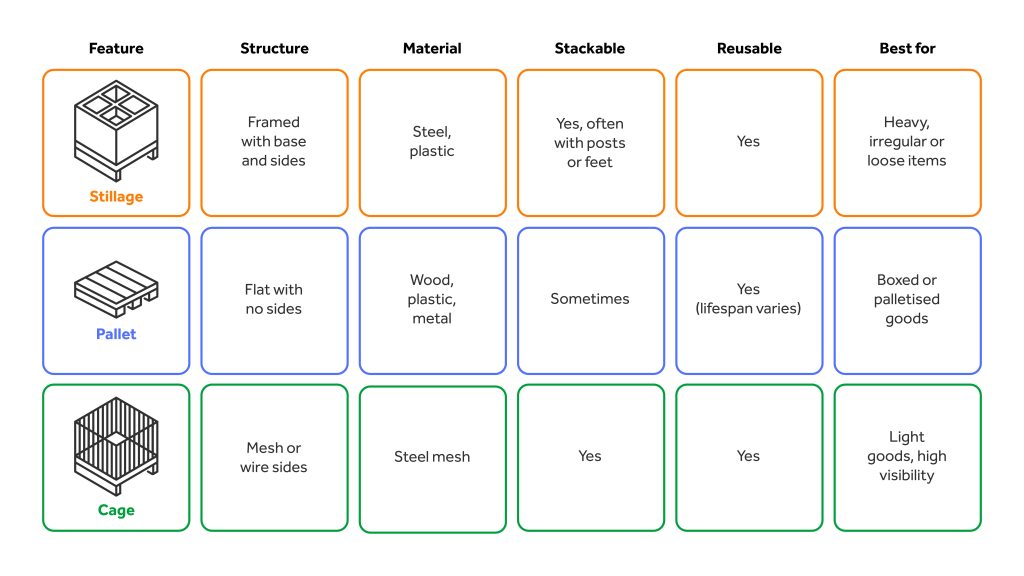
A stillage is a structured unit, typically made of steel or heavy-duty plastic, used to store or transport goods safely and efficiently. Unlike pallets, stillages include a base and supporting sides, posts or mesh panels, making them ideal for loose or heavy items.
Stillages can be:
- Stackable, saving floor space
- Customisable to fit specific parts
- Robust and reusable, offering long-term cost savings
Common stillage types:
- Steel stillages – Heavy-duty, perfect for industrial and construction use
- Plastic stillages – Lightweight, corrosion-resistant, ideal for food and pharma
- Post pallets – A hybrid stillage/pallet with upright corner posts for vertical stacking
- Custom stillages – Tailored to exact specifications for parts, dimensions or handling requirements
- Stillage feet – Elevate units for forklift access and stackability
What is a pallet?
A pallet is a flat transport structure that supports goods in a stable fashion while being lifted by a forklift, pallet jack or front loader. Made from wood, plastic or metal, pallets are open and do not include sides or posts.
Pallets are ideal for:
- General-purpose logistics
- Lightweight or boxed goods
- Situations where shrink-wrap or strapping secures items
How big is a pallet?
Standard sizes include:
- UK pallet: 1200mm x 1000mm
- Euro pallet: 1200mm x 800mm
- Custom pallets available for niche applications
What is a cage pallet or mesh cage?
A cage (or cage pallet) is a type of stillage with mesh or wire sides, often collapsible. These are widely used in retail, automotive and recycling industries for high-visibility and secure transport of goods.
Cages offer:
- Easy identification of stored goods
- Ventilation
- Fold-flat design when not in use
Why choose a stillage for your operation?
Stillages combine the strength of steel, the stackability of post pallets, and the customisation options you won’t find in standard pallets or cages. You can reduce product damage, improve warehouse space utilisation, and create a more structured storage workflow.
FAQs
What is the difference between a stillage and a pallet?
A pallet is flat and open, while a stillage includes a base and frame for secure containment, better suited for loose or heavy items.
How big is a pallet?
Typical pallet sizes:
- UK: 1200 x 1000mm
- Euro: 1200 x 800mm
How big is a stillage?
Sizes vary depending on the design and application but commonly range between 1000mm x 800mm to 1200mm x 1000mm, with custom sizes available.
How big is a post pallet?
Usually similar to a pallet in base size (1200 x 1000mm) but includes 4 upright posts ranging from 500mm to 1500mm in height, depending on stacking needs.
Need help choosing the right solution for your business?
Our team of manufacturers, designers and customer service experts are on hand to help assist you with any questions you may have about industrial storage and transportation units.
Talk to our team today
